35 Year Anniversary Interview
Please introduce yourselves
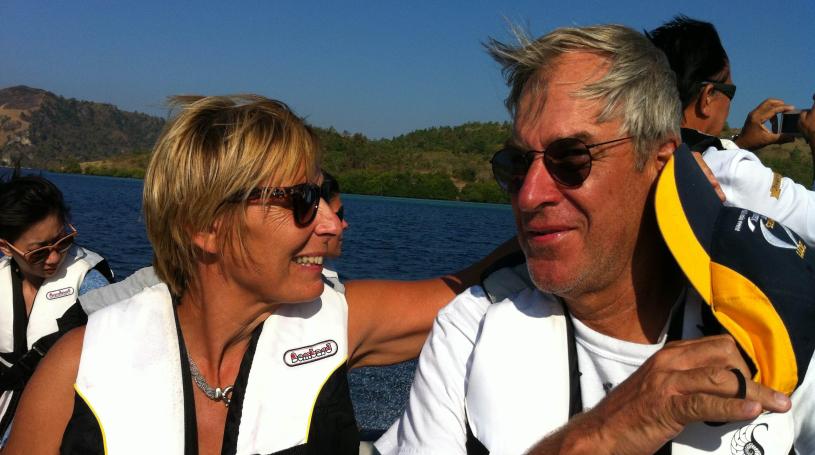
We arrived in Hong Kong in 1985, when I (Bart) was working for Pierson, Heldring & Pierson, a subsidiary of AMRO Bank at the time. Before that, my career had taken me from Amsterdam to London and then to Hong Kong. My original contract required me to relocate after five years, which was quite standard for expat contracts in those days, but we liked Hong Kong so much that we decided to resign and stay. We then started our own company, Brumby Limited, which provided financial services, trust services, and business consulting. It grew quickly, and within ten years we had around 100 people in the region.
How was the Dutch Business Association (DBA) formed?
About a year before the DBA was formally established, I was approached by the Financial Secretary. He explained that the general 'Chamber of Commerce' structure, which represented multiple business communities, would no longer be suitable after the 1997 handover. Other countries either had to disappear from that structure or create their own chambers. That was the moment when it became clear that the Dutch community needed its own organisation.
We brought together the different Dutch groups in Hong Kong, including the Nederlandse Vereniging (Dutch Association), the Dutch Chief Executive Council, and others who were already active in the community. Informal Dutch business lunches at the Furama Hotel, also brought together many people who were already connected to the Dutch business scene. Seeing as we needed to become a non-profit company, we also brought in legal advice, and we consulted the Consul General, who was an important supporting pillar throughout the process.
We decided early on that we needed at least 50 founding members before going official. At first, it felt like that would happen quickly, but it took much longer than expected. We had about 30 members quite fast, but then it took time to reach the full target. One of the key moments was when Shell finally joined after a change in management. Once that happened, we reached the required founding members, and the Dutch Business Association was formally launched.
What was the biggest challenge in the beginning?
The biggest challenge was building enough support and keeping the organisation together in those first years. Recruiting committee members was always difficult because people are busy and would rarely volunteer, we had to go out and actively persuade people to take part. It was also important to maintain strong contact with the Managing Director and the Consul General so that the Chamber had both internal structure and external support.
At first, we worked out of our own office, then from Rabobank’s office, and eventually we secured space in the Consulate General. That was a major step because it made cooperation much easier. The Consulate was also very happy with the arrangement because it allowed them to provide a much broader service to newcomers and Dutch businesses than they could have done alone.
How would you describe the evolution of the Chamber?
The structure was well chosen from the beginning, which is why it has lasted until today. One of the reasons for its success was that it became integrated with the Consulate early. We were fortunate that the Consul General during those years were very supportive and saw the value of close cooperation. That gave the Chamber a strong foundation.
Over time, the Chamber became more independent and self-sustaining. It built its own membership base and income, so it no longer depended on subsidies. That independence was important, because it meant the organisation could grow on its own terms and remain relevant.
What were some of the key highlights?
One of the most important early initiatives was the China Seminar. Even before 1997, we felt it was essential to maintain a strong connection not only with the Dutch community, but also with China. The Chamber also developed committees such as the China Committee and the SME Committee, both of which were active and successful.
Another major highlight was organising visits by Dutch royals and prime ministers. These were very large and prestigious events, and they required a huge amount of planning. The Queen’s visit was a major moment. It involved official dinners, business meetings, and social visits, all coordinated with the Consul General and his team. It was a huge undertaking, but also one of the proudest moments of that period.
The same was true about the visits by prime ministers and business missions. Some of them were enormous, with hundreds of people involved. They took a lot of work, but they were successful and very much appreciated by both the Dutch authorities and the Hong Kong side.
How was the Chambers’ Relationship with the Hong Kong Government?
In those days, the Chamber had regular monthly meetings with government representatives, and those meetings were very useful. If there was an issue, experts would be brought in for the next meeting, and the matter would be discussed properly. The Chamber played a role in practical issues too, such as encouraging the development of international schools when there was a shortage. That influence was possible because Hong Kong and the Dutch business community had real significance at the time. The Netherlands was one of the major investors in China, and Hong Kong played a much bigger gateway role than it does today. The Chamber was respected as part of that wider business ecosystem.
What would you have done differently?
Not much, really. It was an extremely enjoyable period, and it was great to work with the people involved. If there was one lesson, it would be that leadership roles should not go on forever. I felt strongly that if people stay too long, it becomes harder for new people to come in. That is why I supported the idea of term limits, so that fresh people could step up while still allowing experienced members to contribute through committees.
What do you miss most about Hong Kong?
The can-do mentality. In Hong Kong, people act quickly and get things done. There is far less bureaucracy than here (in the Netherlands), and people respond fast. Even an email is usually answered within 24 hours. That type of energy and efficiency are things that I miss a lot. I also miss the social atmosphere, the international community, and the climate. Hong Kong is a place where business and social life were naturally connected. People came from all over the world, and it made the city feel dynamic, open, and full of possibility.