Daniël de Blocq van Scheltinga: Reflections on 35 Years of the Dutch Chamber in Hong Kong
To begin, could you tell us a little about yourself and your journey to Hong Kong?
“My name is Daniël de Blocq van Scheltinga. I am Dutch, born in Amsterdam, although I moved to Belgium when I was eight and went to school there. At 18, I returned to the Netherlands to study law at Leiden University. After graduating, I completed two years of military service as a Navy officer before moving into banking - more by chance than by careful planning.”
“My first role was as a trainee at what was then the biggest bank in the world, a Japanese bank in Amsterdam. That also became my first real connection with Asia. Part of my training took place in London and Tokyo, which was a fascinating experience. After two or two and a half years, I moved to a Belgian bank that was expanding in the Netherlands and helped build up the corporate banking business. When I started, there were only about 12 of us; by the time I left, there were around 250.”
“By that point, ABN AMRO had merged, and I was head-hunted to join. Within two years, the bank went through a major restructuring, and I was sent to Hong Kong for what was supposed to be a four-year assignment as Head of Energy and Chemicals, Petrochemicals Asia-Pacific. As often happens, four years turned into more than 25, and Hong Kong became home.”
How did your involvement with the Dutch Chamber begin?
“My connection with the Dutch Chamber goes back to my years at ABN AMRO. At the time, it was almost expected that if you came to Hong Kong, you would get involved in the Dutch Chamber. Initially, I did not feel a strong need for it, because I already had many Dutch connections through work. I was travelling to Amsterdam regularly and dealing with Dutch colleagues, so I did not immediately see what the Dutch Chamber would add.”
“Later, quite by chance, I ran into an old Navy colleague in Hong Kong who happened to be chairman of the Dutch Chamber at the time and was working for ING. He encouraged me to come along, and although I was initially a bit reluctant, I soon found that I genuinely enjoyed it. Because I had spent a considerable time working with Mainland China — including one particularly unusual experience of being asked to run the finance division of a top-tier Chinese state-owned enterprise in Beijing — I was invited to co-chair the China Committee. That was really the start of my Dutch Chamber involvement.”
“From there, I joined the Board and, to my surprise, eventually became chairman. I later also served on the Advisory Board, so my connection with the Dutch Chamber lasted for many years and in several different capacities. We had an excellent team, and there was a real sense that we were trying to modernise certain aspects while staying true to the original purpose.”
Looking back, how would you describe the Dutch Chamber’s evolution over the years?
“I think the Dutch Chamber has always had to evolve in step with Hong Kong itself. When I arrived in 1995, it was already clear that Hong Kong was becoming more Chinese, even before the handover. You could see it in the city, in the MTR advertising, and in the broader atmosphere. At the same time, the Dutch Chamber itself had a strong role to play as a bridge for Dutch business.”
“The China Seminar, for example, was always very popular. In those years, there were more events, more direct networking opportunities, and a stronger visible social presence. Over time, some of that has changed, but I also think the Dutch Chamber became more structured and more professional. We introduced initiatives that worked well, such as sector committees and differentiated pricing for different membership categories. Those were important developments.”
“At the same time, some challenges remained constant: how to attract new members, how to keep them engaged, and how to retain gold members. Those are not new questions — they existed then, and I imagine they still exist today. One thing I learned is that people should not stay in one position for too long. If someone remains in office for 10 or 15 years, fresh ideas inevitably become harder to bring in. Eventually, things become automatic, and that is not healthy, and Dutch Chamber needs new perspectives.”
As the Dutch Chamber marks its 35th anniversary, are there particular moments that stand out?
“One particularly touching memory was awarding lifetime honorary membership to Mr. K. K. Yeung. He had played an important role from the beginning in supporting Dutch businesses in Hong Kong and helping Hong Kong businesses connect in the Netherlands. He was always active and attended all our meetings and events. We gave him the honour around the time of our 25th anniversary, and the ceremony meant a great deal to him and his daughters. That remains one of the most meaningful moments I remember.”
“I also remember the annual AGMs quite fondly, partly because there were always a few familiar members who would ask detailed questions about finances or other matters. It became almost a kind of ritual, and it was oddly entertaining in its own way. Those moments showed that the Dutch Chamber was more than a platform for formal meetings. It was – and is – a community with history, humour, and strong personal ties.”
What does receiving the Long-Term Membership Award represent in your journey?
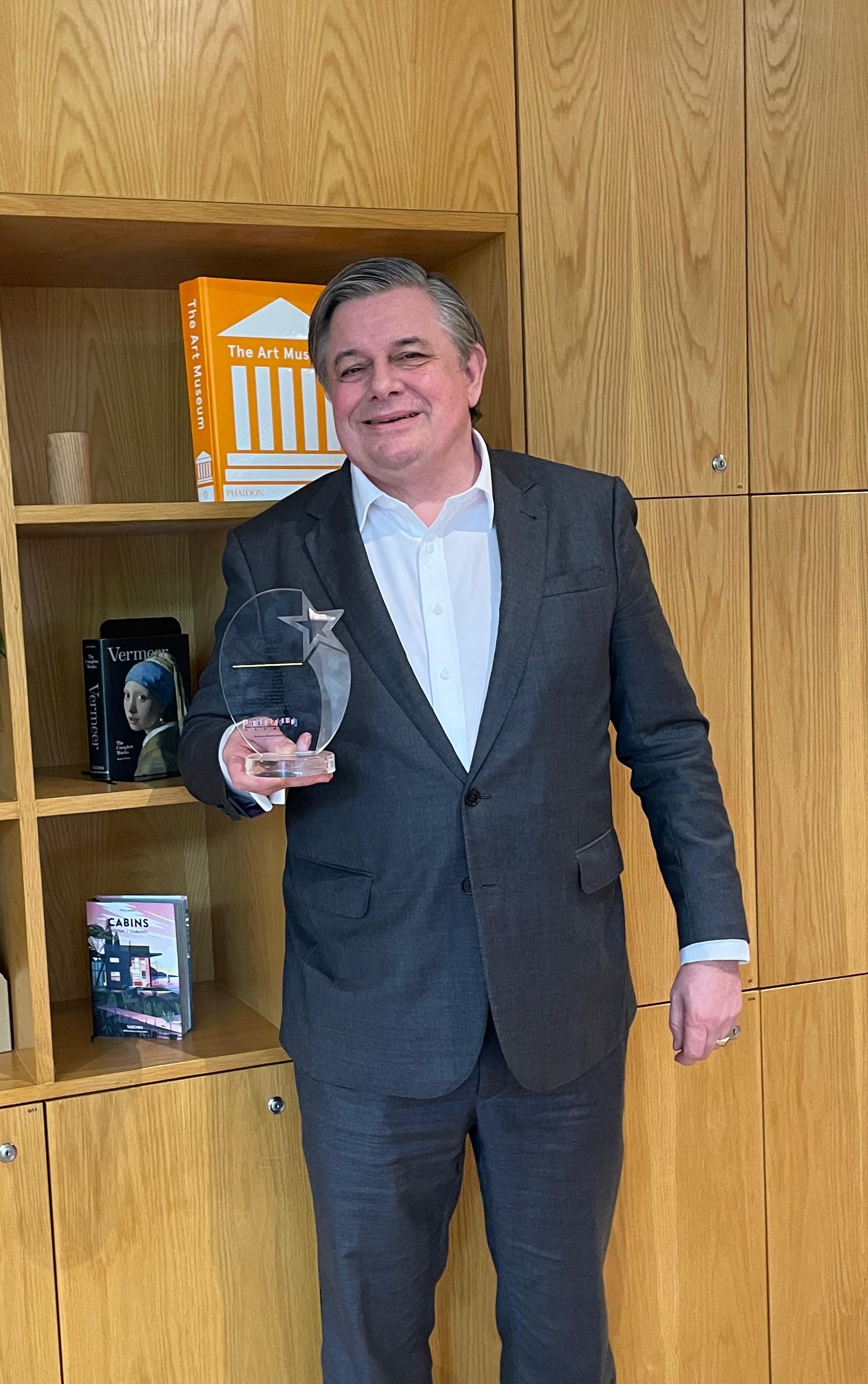
“I regard the Long-Term Membership Award not simply as a personal accolade, but as a meaningful reflection of my journey with the Dutch Chamber. While I am sincerely honoured to receive this recognition, I view it foremost as a reminder of the path I have taken, and the experiences gained along the way. It reaffirms a principle I strongly believe in: the more one contributes to the Dutch Chamber, the greater the value one ultimately derives from it.”
“My involvement has developed progressively over the years, beginning as co-Chair of the China Committee, followed by serving as Chairman of the Dutch Chamber, and later contributing on the Advisory Board. Each stage has been both enriching and rewarding. I have had the privilege of working with an exceptional team, including highly capable General Managers and dedicated staff, whose contributions have been instrumental throughout.”
“Beyond the Dutch Chamber itself, I have also valued the opportunity to engage with the broader ecosystem, including the Consulate, the Hong Kong Chamber, and the European Chamber, particularly during more challenging periods. In this context, the award represents not only longevity, but also a sustained commitment to collaboration, contribution, and community-building.”
Where do you see the Dutch Chamber heading in the next decade?
“I think the Dutch Chamber should continue doing what it does well, while staying realistic about the environment in which it operates. Hong Kong has changed a great deal, and the number of Dutch companies in the city may change over time. If that trend were ever to continue downward, the Dutch Chamber would need to think carefully about how it adapts. That may mean broadening its model in some way. But I do not think it should lose its identity. There is real value in retaining a distinctly Dutch character.”
“The Dutch Chamber also needs to maintain a strong relationship with the Consulate General. That link is very important. In the years ahead, I would like to see the Dutch Chamber remain active, relevant, and connected to Dutch business in Hong Kong, Macau, Shenzhen, and beyond. There are still opportunities, provided you are willing to look for them.”
“And of course, there is the wider context of the Greater Bay Area. Hong Kong still has a very important role to play. You can innovate and engineer in Shenzhen, but you still need Hong Kong for finance and international trade. That is where the city’s strength lies, and it is also where the Dutch Chamber can continue to be useful.”