Interview with Edvard Rinck
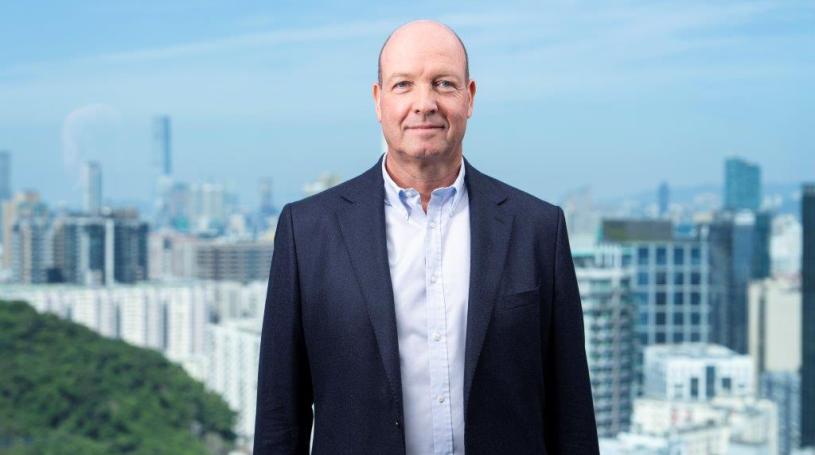
Please tell us a bit about yourself, your role, the team and what EY does.
At EY, Bas, Yee Man, and I are three Dutch colleagues, and we are all involved with Hong Kong and China in different ways. Bas has been based in Hong Kong since 2021 and works in EY’s Financial Services Organisation (FSO), mainly advising banks and insurers. He focuses on Hong Kong and China, advising on both Chinese outbound to Europe and European inbound to China. Yee Man previously spent time in Beijing and is now based in the Netherlands, where she supports Chinese companies investing into Europe, which is also why she is a speaker at the China Seminar 2026.
As for myself, I have been in the tax profession since 1993 and with EY since 2000. Over the course of my career, I have worked in multiple countries, including the Netherlands, Hungary, Switzerland, the United States, and Singapore. Since 2011, I have been at EY Hong Kong. Nowadays, I spend most of my time working from the EY office in Zürich, Switzerland, mainly because I focus on European companies investing in Asia. At some point, it simply became more practical to be close to those clients and their management teams. That said, I am still regularly in Hong Kong and remain closely involved with the region.
What matters most in my work is ensuring everything works together in practice — not only from an income tax perspective, but also across VAT, customs, logistics, and broader business operations. In short, I help companies build cross-border operating models that are both compliant and operationally effective.
EY is a global advisory firm, originally an accounting firm, but today active across taxation, legal advisory, supply chain, digital services, and strategy consulting. I work within EY’s tax practice in a highly operational area called Operating Model Effectiveness (OME), where we help companies redesign how they operate, from distribution structures to manufacturing footprints, ensuring tax, logistics and business work harmoniously together.
What role does EY play in facilitating the journey of Hong Kong and Chinese companies trying to reach the European market? Where is EY adding the most value in HK/Chinese outbound transactions today?
In general, we support companies throughout the full outbound journey — advising them on where to invest, how to structure the investment, and how to run the operations.
One of the unique strengths of EY is our Chinese Overseas Investment Network (COIN). Through COIN, we have dedicated teams supporting Chinese clients in every European country, often including professionals from China. This means we can combine local market expertise with Chinese-language capabilities and cultural understanding. This is important, as Europe is more complex than many investors initially expect. Companies from large home markets like China or the United States often assume the EU operates as one unified region. Europe is made up of many countries, languages, and regulatory interpretations. For instance, even where EU legislation is harmonised, VAT implementation differs significantly between countries, creating a range of nuances that companies need to navigate.
From what you see at EY, what are the main drivers for Hong Kong and Chinese companies expanding into Europe?
The main driver remains the most fundamental: access to a large and attractive market. Europe remains highly appealing due to its purchasing power and sophisticated consumer base.
However, several additional factors have become increasingly important in recent years. For some Hong Kong / Chinese companies, the other major global market — the United States — has become more difficult to access due to geopolitical tensions and trade tariffs. This has made Europe an even more strategic priority. Regulation is another key driver. Companies producing outside the EU and selling into Europe must navigate a growing set of legislative requirements. One example is CBAM (the Carbon Border Adjustment Mechanism), which can increase costs for companies with less “green” supply chains outside the EU. Producing inside Europe can help reduce this exposure.
Similarly, establishing production within the EU can help companies mitigate or avoid import tariffs. Finally, Europe’s green transition is creating significant opportunities. With the EU accelerating electrification — including electric vehicles and renewable energy — Hong Kong / Chinese companies with strengths in areas such as solar power, EVs and related supply chains see strong potential to bring their technology and products into the European market.
When Hong Kong and Chinese companies move into Europe, what tends to be the biggest challenge? And what makes European integration particularly hard compared to other regions?
The biggest challenge is complexity; Europe is still made up of many different countries. Even within the EU, you are dealing with multiple legal systems, languages, administrative cultures, and regulatory approaches. Aside from tax rules, there is a whole regulatory side that companies need to navigate. One example is FDI screening. Almost all EU countries now have screening mechanisms when foreign companies acquire assets, especially in sensitive industries such as crypto or defence. These processes can influence deal timelines and even determine whether an acquisition is approved at all. Beyond that, there are many other regulatory requirements — such as product safety rules and other industry-specific regulations.
Overall, there is simply a lot of complexity that companies need to manage when entering Europe, and this often requires much more local expertise than companies initially expect.
How has the advisory role changed for EY as outbound deals have become more complex geopolitically and regulatorily?
The advisory role has shifted significantly toward the regulatory and operational side.
Of course, investment and holding structures are still essential — companies need a clear way to bring capital into Europe and repatriate value efficiently, for example, through dividends. But today, outbound expansion goes far beyond structuring. The bigger question has become: how do you operate the business successfully in Europe?
This shift is also driven by a stronger focus on long-term commitment. Many companies still approach outbound deals with short-term questions around capital flows, incentives, and subsidies. However, European governments and authorities — including tax authorities and subsidy-granting bodies — increasingly want to see a credible long-term plan. They want to understand how the company will develop the business, invest locally, and potentially build R&D capabilities in Europe, rather than using an acquisition purely as a quick gateway into the market.
As a result, EY’s work has become far more integrated across all disciplines. This is exactly what we do in Operating Model Effectiveness (OME): aligning corporate tax, VAT, customs duties, regulatory requirements, and operational realities into one functioning model.
There are also many practical elements that companies often underestimate. If Chinese companies relocate managers to Europe, they frequently bring families, which introduces additional complexity around schooling and long-term settlement.
Finally, subsidies have become a more prominent part of the conversation. Many Chinese companies are familiar with government support and special tax regimes at home and expect similar opportunities abroad. In many cases, these incentives do exist in Europe, but accessing them requires negotiation and local expertise — which is where EY’s COIN network is particularly valuable, combining local knowledge with Chinese-language capabilities and an understanding of how Chinese companies operate.