World Environment Day: Turning Hong Kong's Waste Challenge into Practical Action
Could you please introduce yourself and tell us about Waste Wise?
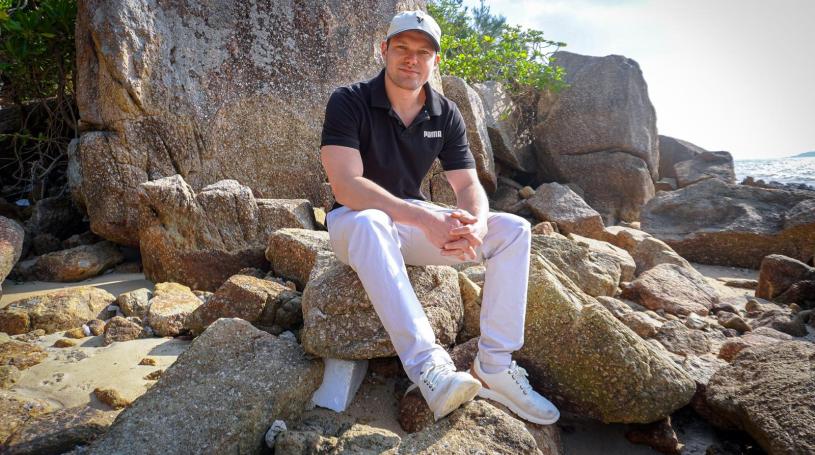
My name is Martijn Ros. I am a Dutch national who grew up in Hong Kong after moving here in 1999 with my father, who was working in manufacturing in Hong Kong and later in China.
Waste Wise started in 2020, when my co-founder and I returned to Hong Kong after university and wanted to build something in the sustainability space that could have a real, practical impact.
At first, we thought the solution was to develop and sell compostable alternatives to single-use materials, especially as the issue became more visible during COVID with products such as masks, gloves, and other disposable items. However, we quickly realised that products alone were not enough.
If Hong Kong did not have the infrastructure to process these materials properly, then even compostable alternatives would still end up as waste. That realisation changed the direction of the business. Instead of focusing only on alternative materials, we shifted towards building the composting and waste-processing capacity needed to support them.
What problem in Hong Kong’s waste landscape were you hoping to address when starting Waste Wise?
The main problem we wanted to address was the lack of practical solutions for organic waste in Hong Kong.
Food waste remains one of the city’s largest waste categories, and in 2024 the disposable plastic tableware ban created an additional challenge. Many businesses started looking for alternatives to plastic, but there were still not enough local facilities that could properly process compostable materials after use.
At the same time, we also saw large volumes of yard waste that were not being recovered or processed effectively. So, for us, there was a clear gap in the market.
We started with an MVP model: one rented composting unit placed in a borrowed space through a contact in the waste industry. The idea was simple: test whether there was demand, understand what types of waste we could process, and learn how a composting business could operate in Hong Kong.
From there, we began collecting and processing organic waste, while also testing how to manage compostable packaging and other new materials entering the city.
What inspired you personally to work on waste reduction?
For me, it really started to click after university. I would not say sustainability had always been the original plan, but once I began looking more seriously at waste, it felt like a very practical and important problem to focus on.
I also grew up with a Dutch background, where composting and waste sorting are much more normal parts of everyday life. So I already knew these systems could work when the right infrastructure, habits, and education are in place.
Hong Kong is a very different environment. Space is limited, land is expensive, and there is not the same backyard composting culture that exists in the Netherlands. At the same time, the city generates a huge amount of waste, so the challenge felt both urgent and very local.
I also spend a lot of time hiking in Hong Kong, and seeing waste in natural areas made the issue feel even more real. For me, this became less about chasing a perfect idea of sustainability, and more about working on something concrete that could improve the system here.
How do you implement your waste reduction initiatives in Hong Kong, and how do schools and events fit into that work?
A large part of our work focuses on education and contamination control. We work closely with clients before the waste even reaches our facility, because the cleaner the waste is at source, the better the final outcome will be.
That means training staff in English and Cantonese, creating clear SOPs, and putting up signage that shows exactly what can and cannot go into each bin. We also make sure our signage includes icons and real product examples, so people can understand the system quickly and easily.
Events have been a very effective environment for this because they allow us to work with organisers in advance and design the system properly before the event starts. At some events, we also place volunteers at waste stations to guide attendees and reduce contamination on the spot.
Schools are another important part of our work. We have been working with the Canadian International School, and we have also reached out to other schools to explore ways of building stronger waste habits among students.
Ultimately, the goal is not just to collect waste. The goal is to help people understand why sorting matters, and to make it easier for them to do the right thing.
What are your hopes for Waste Wise over the next couple of years?
The main goal is to scale. Right now, we are still operating at an MVP stage, but we want to grow from processing around 500 kilograms per day to five tonnes per day. That would make us much more competitive and allow us to serve more clients, more locations, and more waste streams.
We are also exploring larger partnerships, including potential pilots with major attractions and institutions. Alongside that, we are developing a digital platform to track waste from source through to downstream use, so clients can better understand where their waste goes, how it is processed, and what impact it creates.
Longer term, I believe Hong Kong needs smarter waste tracking and stronger systems for organic waste. There is still a lot of education needed, but there is also real potential for practical progress if the right infrastructure is in place.
For Waste Wise, the goal is to keep proving that composting can work in Hong Kong, and that it can create value not only for businesses, but also for farmers, the environment, and the wider community.
What is your message for World Environment Day?
My message is simple: waste sorting matters more than people think.
I understand that recycling and waste sorting can sometimes feel inconvenient but spending a few extra seconds sorting waste correctly at home, at work, or at events can make a real difference downstream.
One piece of contamination can affect an entire batch. That means more work, lower-quality recycled materials, and less usable compost in the end. But the opposite is also true: when waste is sorted properly, it becomes much easier to recover value from it.
So, on World Environment Day, I would encourage people to focus on doing the small things properly. It may not feel like much in the moment, but when more people take that extra step, the impact adds up very quickly.